Fly High 2 Flashcards (Vocabulary and Alphabet) Guide
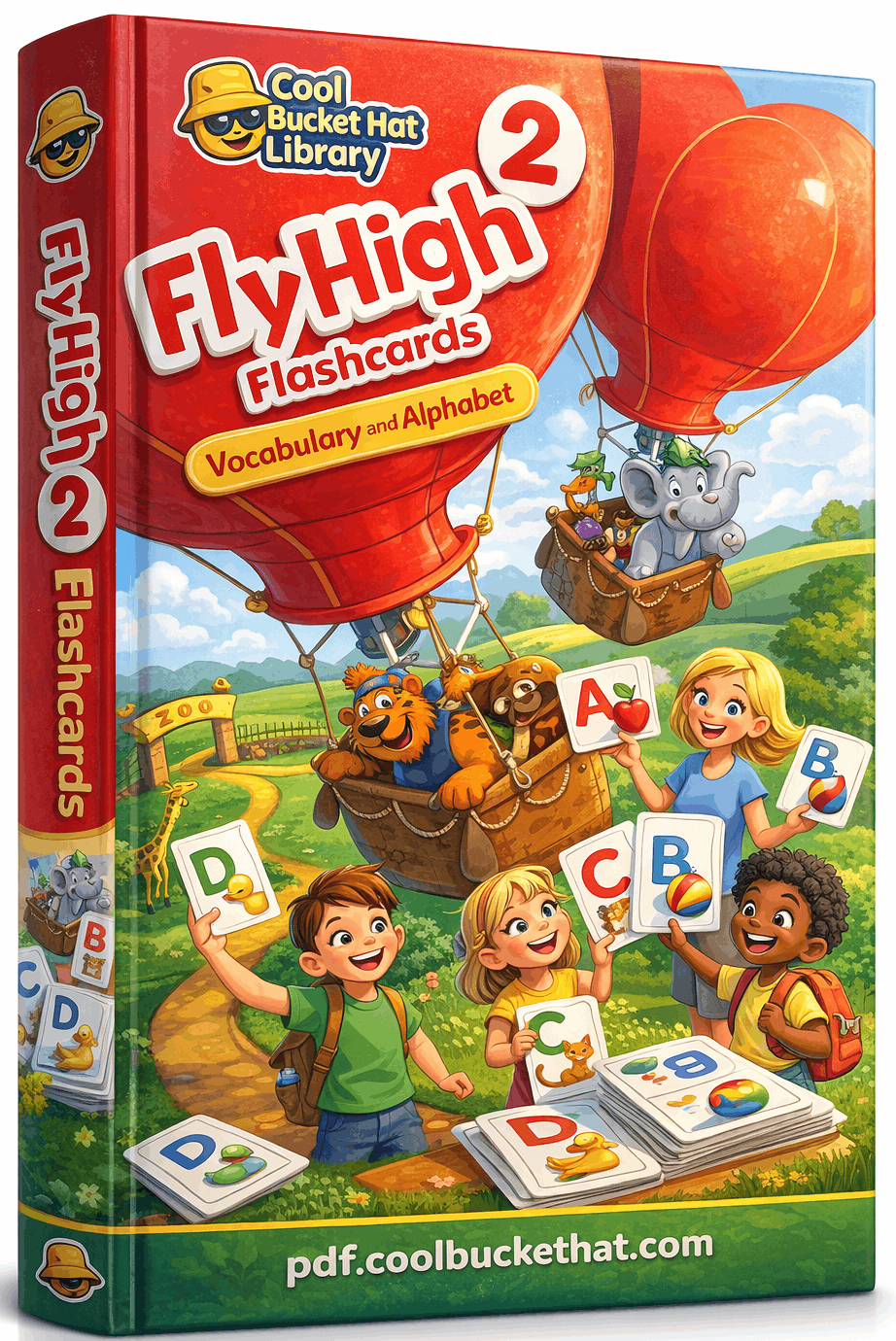
Fly High 2 Flashcards (Vocabulary and Alphabet) are powerful learning tools designed to help young learners strengthen their English language skills in a fun and interactive way. These flashcards focus on two essential areas of early education: alphabet recognition and vocabulary building. As a result, children develop a strong foundation that supports reading, writing, listening, and speaking skills.
In early language learning, visual aids play a key role. Therefore, flashcards are often used in classrooms and at home to reinforce lessons. They are simple, effective, and easy to use. Most importantly, they turn learning into an engaging activity rather than a boring task.
Why Flashcards Are Important for Young Learners
Children learn best when lessons are visual and interactive. Flashcards provide both of these elements. They combine colorful images with clear words. Because of this, learners can connect pictures with meanings quickly.
Moreover, repetition with flashcards improves memory retention. When children see and say words repeatedly, they remember them longer. In addition, short practice sessions keep attention levels high.
Flashcards also encourage active participation. Instead of passively reading from a book, children respond, speak, and interact. This involvement boosts confidence and communication skills.
Overview of Fly High 2 Flashcards (Vocabulary and Alphabet)
The Fly High 2 Flashcards (Vocabulary and Alphabet) set is designed to match the learning level of primary school students. It supports structured English courses and helps reinforce classroom lessons.
Typically, the set includes:
Alphabet cards with uppercase and lowercase letters
Vocabulary cards with colorful illustrations
Theme-based word groups
Clear and bold text for easy reading
Each card presents one main concept. This simple design avoids confusion and helps learners focus on one word or letter at a time.
Strengthening Alphabet Recognition
Alphabet mastery is the first step toward reading fluency. Children must recognize letters before they can form words. These flashcards support that process in a clear and organized way.
Letter Identification
Children learn to identify both uppercase and lowercase letters. By seeing letters repeatedly, they develop quick recognition skills. Fast recognition improves reading speed later on.
Phonics Support
Alphabet flashcards often include phonetic sounds. Therefore, learners connect letters with sounds. This connection builds the foundation for decoding words.
Writing Reinforcement
Teachers and parents can use the flashcards to encourage tracing and writing practice. After showing a letter card, children can write it on paper. This method strengthens both visual and motor skills.
Expanding Vocabulary Step by Step
Vocabulary development is essential for communication. Without enough words, children cannot express ideas clearly. That is why vocabulary flashcards are so useful.
The Fly High 2 Flashcards (Vocabulary and Alphabet) include carefully selected words suitable for young learners. These words often relate to daily life and familiar topics such as:
Animals
Food
Colors
Numbers
Family members
Classroom objects
Because the vocabulary is practical, children can use it in real conversations.
How Flashcards Improve Memory Retention
Memory improves through repetition and association. Flashcards use both methods effectively.
Visual Association
Each word is paired with a picture. The brain remembers images faster than plain text. As a result, learners recall vocabulary more easily.
Active Recall
When teachers show a card and ask, “What is this?”, children actively search their memory for the answer. Active recall strengthens long-term memory more than passive reading.
Short Practice Sessions
Flashcard activities usually last 10 to 15 minutes. Short sessions prevent fatigue. Consequently, children stay focused and engaged.
Supporting Classroom Activities
Flashcards are versatile teaching tools. Teachers can use them in many ways during lessons.
Group Activities
Cards can be shown to the whole class. Students can answer together or take turns. Group participation increases energy and excitement.
Pair Work
Students can practice in pairs. One student shows the card, while the other answers. Then they switch roles. This method encourages speaking practice.
Games and Competitions
Learning becomes more exciting when games are included. Teachers can create simple activities like:
These activities improve engagement while reinforcing knowledge.
Benefits for Home Learning
Parents also benefit from using flashcards at home. Structured learning materials make home practice easier and more effective.
With Fly High 2 Flashcards (Vocabulary and Alphabet), parents can:
Because the cards are easy to handle, children can even practice independently. Independent learning builds responsibility and confidence.
Encouraging Speaking and Pronunciation
Speaking is often the most challenging skill for young learners. However, flashcards provide a low-pressure way to practice.
Parents and teachers can:
Ask children to say the word clearly
Encourage full-sentence answers
Practice simple dialogues using vocabulary cards
For example, instead of saying “apple,” a child can say, “This is an apple.” Expanding responses improves grammar naturally.
Adapting to Different Learning Styles
Every child has a unique learning style. Some children learn visually, while others prefer hands-on activities. Flashcards support multiple learning preferences.
Visual learners benefit from colorful images.
Auditory learners benefit from repeating words aloud.
Kinesthetic learners benefit from handling and organizing cards.
Because of this flexibility, the cards remain effective for diverse learners.
Building Confidence Through Repetition
Confidence grows when children succeed. Flashcards create many small success moments. When a child correctly identifies a word or letter, they feel proud.
Repeated success builds motivation. Motivated learners practice more often. Over time, steady practice leads to strong language skills.
Furthermore, simple correction methods can be used. If a child makes a mistake, the correct answer can be repeated gently. This approach maintains a positive learning environment.
Tips for Using Flashcards Effectively
To achieve the best results, follow these simple strategies:
1. Keep Sessions Short
Young learners have limited attention spans. Therefore, limit sessions to 15 minutes. Short sessions improve focus and retention.
2. Use Daily Practice
Consistency matters more than long study hours. Daily practice strengthens memory and reinforces knowledge.
3. Mix Alphabet and Vocabulary
Alternate between letter cards and word cards. This variation prevents boredom and keeps sessions interesting.
4. Add Movement
Turn practice into a physical activity. For example, place cards around the room and ask children to find the correct word. Movement increases engagement.
Why Choose Fly High 2 Flashcards (Vocabulary and Alphabet)
Many flashcard sets are available on the market. However, not all are structured for effective learning. The Fly High 2 Flashcards (Vocabulary and Alphabet) are carefully organized to align with beginner English levels.
The design is simple yet attractive. The vocabulary is age-appropriate. The alphabet section reinforces phonics skills. Most importantly, the set supports both classroom teaching and home practice.
Because the cards focus on foundational skills, they prepare children for higher levels of English learning. A strong foundation leads to smoother progress in reading and writing.
Long-Term Learning Benefits
Early exposure to structured vocabulary and alphabet practice creates long-term advantages. Children who master these basics:
As they move to higher levels, learning becomes less stressful. Instead of struggling with basics, they can focus on more advanced concepts.
Final Thoughts
Fly High 2 Flashcards (Vocabulary and Alphabet) provide an effective and engaging way to strengthen early English skills. By combining alphabet recognition with practical vocabulary practice, they create a balanced learning experience.
Flashcards may seem simple, yet their impact is powerful. Through repetition, visual association, and interactive activities, children build strong language foundations. In addition, the flexibility of use makes them suitable for both classrooms and home environments.
When learning feels enjoyable, children stay motivated. With the right tools and consistent practice, young learners can develop confidence and fluency step by step. Choosing structured and interactive resources today can shape a child’s academic success tomorrow.